High-quality melon production rests on sustainable farming practices that support biodiversity and improve soil structure. Top Melon follows a model that combines advanced agronomic techniques with careful management of natural resources. This article looks at the strategies Top Melon uses to create a favourable environment for plant growth while preserving the farm ecosystem.
Sustainable melon growing at Top Melon
Sustainable melon growing at Top Melon is based on an integrated approach that brings together innovation, respect for the environment and attention to product quality. The farm keeps investing in technologies and agronomic practices that reduce environmental impact and improve productivity, with responsible management of soil and water at the centre.
Why does healthy soil matter for crops?
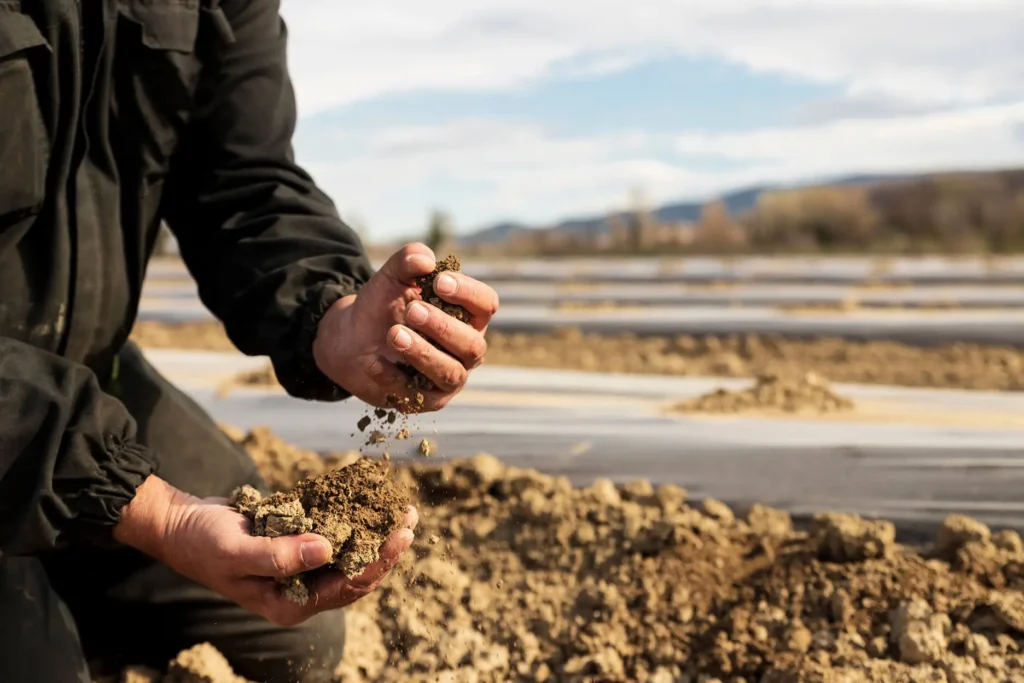
Healthy soil is the foundation of any successful crop. Soil health determines nutrient availability, the efficiency of water uptake and resistance to disease. Well-structured soil, rich in organic matter and beneficial microorganisms, supports strong root development, which is essential for balanced plant growth. Sustainable soil management not only raises yields but also makes crops more resilient to environmental stress.
How do plant-soil interactions affect melon growth?
Interactions between plants and soil are decisive for crop success. They include nutrient exchange, microbial activity and the soil’s ability to support root development.
The importance of soil biodiversity
Soil biodiversity is essential for a stable, productive ecosystem. Soil rich in microorganisms and other forms of life supports efficient nutrient cycles and helps protect plants from disease. Mycorrhizal fungi, for example, improve the uptake of phosphorus and other nutrients, contributing to vigorous melon growth.
Techniques to improve soil biodiversity
To enrich soil biodiversity, Top Melon uses practices such as:
- Compost and organic fertilisers, which provide natural nutrients and encourage beneficial microorganisms.
- Crop rotation and cover crops, which help maintain ecological balance and prevent soil erosion.
The ideal environment for plant establishment
An optimal environment for plant establishment requires well-drained soil, rich in organic matter, with a structure that allows roots to spread. The balance between sand, silt and clay is essential for good aeration and moisture retention, both key for melon development.
Growing strategies for Top Melon melons
Top Melon’s growing strategies aim to maximise fruit quality and yield while keeping environmental impact to a minimum.
Sustainable growing techniques
Top Melon uses several sustainable techniques, including:
- Drip irrigation and digital monitoring systems, which ensure efficient use of water and nutrients.
- Crop rotation and cover crops to improve soil structure and prevent erosion.
- Reduced tillage, to preserve soil microfauna and organic structure.
Innovation in melon production
Technological innovation supports Top Melon’s work in the field, through:
- Sensors and agronomic data analysis systems, which constantly monitor soil and crop conditions.
- Precision agriculture techniques, which allow targeted interventions to optimise resource use and reduce the use of chemicals.
Sustainable soil management
Correct soil management is essential for long-lasting, productive crops.
Improving soil structure
Top Melon invests in practices that improve soil structure, such as adding organic matter and minimising tillage. These techniques help form stable aggregates, improving water retention and aeration, key elements for a successful crop.
Soil biological processes and plant growth
Biological processes such as the decomposition of organic matter and nutrient cycling are fundamental to soil fertility. Bacteria, fungi and other microbial life turn plant residues into humus, supplying essential nutrients to plants and contributing to overall soil health.
Conclusions and outlook
Top Melon applies sustainable strategies that combine innovation and respect for the environment. The farming techniques it uses not only improve melon quality but also help preserve soil biodiversity and structure, both essential for crop resilience. Looking ahead, the farm continues to invest in technologies and agronomic practices that can further reduce its environmental impact.
Frequently asked questions
What are the benefits of healthy soil for growing Top Melon melons?
Healthy soil supports efficient nutrient uptake, improves water retention and helps plants flower and set fruit well, raising melon quality and yield.
How can soil biodiversity be improved sustainably?
Using organic fertilisers, rotating crops, adopting cover crops and reducing tillage all help enrich the soil with beneficial microorganisms.
Which recent innovations are changing melon production?
Precision agriculture technologies, IoT sensors and data analysis systems, together with drip irrigation, are changing the way melons are grown.
How does soil management affect the sustainability of crops?
Good soil management maintains fertility, prevents erosion and keeps an ecological balance, all essential for sustainable farming.
What are the main sustainable growing techniques used for Top Melon melons?
They include precision irrigation, crop rotation, the use of compost and organic fertilisers, and digital monitoring systems.