
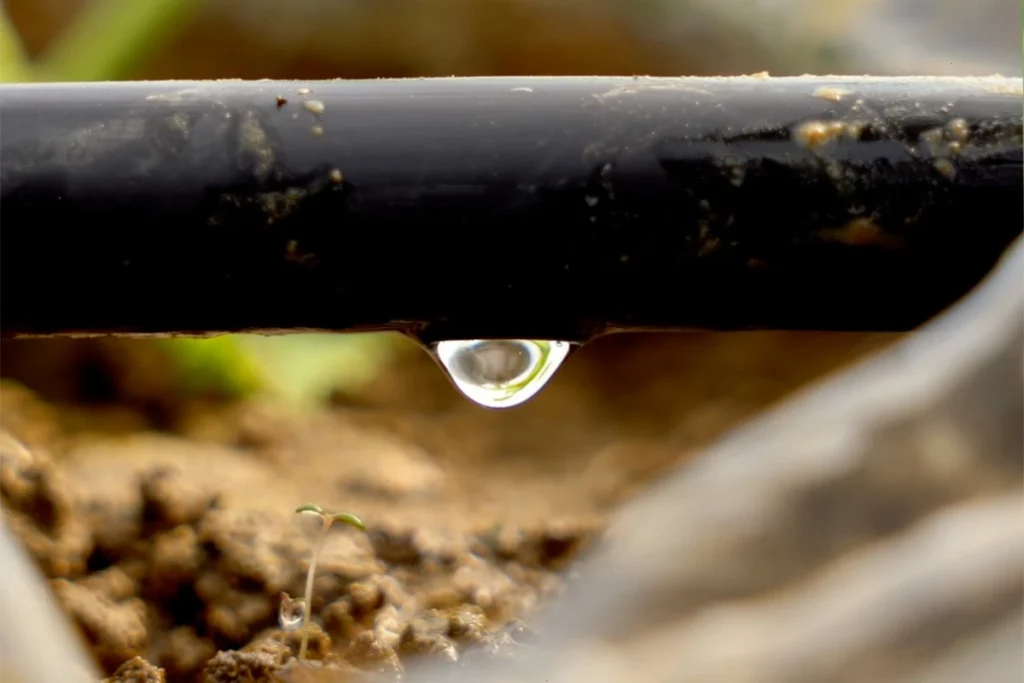
Efficient water use is one of the most important challenges in modern agriculture, especially with climate change and water scarcity. Drip irrigation is an innovative, sustainable way to optimise the water supply to crops, reducing waste and ensuring high productivity. In this article we look at the irrigation techniques used by Top Melon, with a focus on drip systems in open fields and greenhouses and their benefits for efficiency and the environment.
How can irrigation become more sustainable?
Making irrigation more sustainable means targeting the actual water needs of crops. Systems that deliver water directly to the root zone reduce losses through evaporation and run-off and give an even, precise distribution. Techniques such as drip irrigation are essential to ensure that each plant receives the right amount of water, contributing to optimal management of water resources.
Which irrigation techniques work best for melons, watermelons, brassicas and courgettes?
The most efficient techniques include:
- Drip irrigation: delivers water in a localised, controlled way, optimising root uptake and reducing waste.
- Micro-irrigation: similar to drip irrigation but with even more precise distribution, especially suited to crops with specific water needs.
- Controlled sprinkler irrigation: systems that simulate light, regular rain, useful for crops that need even water distribution over large areas.
Sustainable irrigation basics
Why sustainability matters in irrigation
Sustainable irrigation means using methods that minimise environmental impact, reduce water consumption and preserve water resources for future generations. Efficient systems such as drip irrigation make it possible to obtain larger harvests and better quality while respecting the environment.
Goals of sustainable irrigation
The main goals include:
- maximising water efficiency;
- reducing waste;
- improving crop productivity;
- preserving soil quality;
- promoting low-impact farming practices.
Advanced irrigation techniques
Drip irrigation
Drip irrigation delivers small amounts of water directly to the roots, reducing losses through evaporation and run-off. This system, used by Top Melon, ensures precise, targeted water distribution, which is essential for melon, watermelon, brassica and courgette crops. It also allows fertilisers to be applied gradually, optimising nutrient uptake.
Micro-irrigation
Micro-irrigation is a variant of drip irrigation that offers even greater precision, ideal for crops with specific water needs. It achieves higher distribution efficiency, which is particularly useful in controlled environments such as greenhouses.
Controlled sprinkler irrigation
Controlled sprinkler irrigation distributes water evenly over a defined area, simulating light rain. It is useful in open fields, where water must be spread evenly over large areas.
Saving water in crops
Ways to reduce water use
Drip irrigation and micro-irrigation deliver water exactly where it is needed, avoiding losses and waste. These systems are designed to use water as efficiently as possible, responding precisely to plant needs.
Innovative water-saving technologies
Beyond traditional techniques, new technologies make it possible to monitor and adjust water use in real time, further optimising resources and allowing growers to act promptly for maximum efficiency.
Specific crops: melons and watermelons
Water needs of melons and watermelons
Melons and watermelons need steady, targeted irrigation, especially during fruit development. Their water needs are high and must be managed precisely to obtain juicy, high-quality fruit.
Recommended irrigation techniques
For melons and watermelons, drip irrigation has proved particularly effective, delivering the right amount of water directly to the roots and avoiding excesses that can affect fruit quality. Top Melon uses this technique to maximise the yield and quality of its produce.
Specific crops: brassicas and courgettes
Water needs of brassicas
Brassicas need a steady water supply to develop heads and leaves. Accurate irrigation helps maintain soil fertility and reduce water stress.
Irrigation for courgettes
Courgettes need precise irrigation to produce fruit of the right size and quality. Drip irrigation, combined with good soil management, is essential for firm, well-developed courgettes.
Greenhouse or open field irrigation
Pros and cons of greenhouse irrigation
Greenhouse irrigation offers greater control over environmental conditions, allowing more precise management of water and nutrients. However, installation and maintenance costs can be higher than in open fields.
Strategies for open field irrigation
In open fields, drip irrigation is an ideal way to reduce waste and ensure adequate water distribution over large areas. Modular systems allow irrigation to be adapted to the specific needs of each crop, improving efficiency and reducing operating costs.
Sustainability and environmental impact
Reducing the ecological footprint
Drip irrigation significantly reduces the ecological footprint of farming by minimising water waste and, thanks to more targeted fertiliser distribution, reducing the need for chemical inputs. It supports responsible management of natural resources and more environmentally friendly farming.
Sustainable practices to adopt
Combining sustainable irrigation techniques such as micro-irrigation and controlled sprinkler irrigation with traditional methods such as crop rotation and composting creates a holistic approach that supports soil health and biodiversity, both key to long-lasting agriculture.
Conclusions and recommendations
The most effective techniques in brief
Drip irrigation, micro-irrigation and controlled sprinkler irrigation are effective ways to optimise water use, ensure crop quality and promote sustainable farming. In particular, the drip system used by Top Melon delivers water directly to the roots, improving water efficiency and reducing waste.
Tips for growers
- Assess the specific water needs of each crop and choose the most suitable irrigation system.
- Combine sustainable practices such as composting and crop rotation to improve soil health.
- Monitor system efficiency regularly to make improvements and ensure consistent water savings.
- Consider adopting new technologies to further optimise the use of water.
Frequently asked questions
What is the main difference between drip irrigation and micro-irrigation?
The difference lies mainly in precision: drip irrigation delivers small amounts of water directly to the roots, while micro-irrigation can include more sophisticated systems for even greater control.
How can I calculate the water needs of my crops?
Water needs can be calculated according to the specific crop, taking into account factors such as soil type, climate and growth stage.
Is drip irrigation suitable for all crops?
In general yes, and it is especially effective for crops such as melons, watermelons, brassicas and courgettes, which need a targeted, steady water supply.
What are the initial costs of installing advanced irrigation systems?
Costs vary with the size of the area and the type of system, but the investment is offset by water savings and higher productivity.
How can I monitor the efficiency of my irrigation system?
Efficiency can be assessed through regular checks of soil conditions and water consumption, making sure water is used as efficiently as possible.
In conclusion, the drip irrigation techniques used by Top Melon optimise water use for melon, watermelon, brassica and courgette crops in both open fields and greenhouses, reducing waste, improving fruit quality and supporting responsible management of natural resources.


