
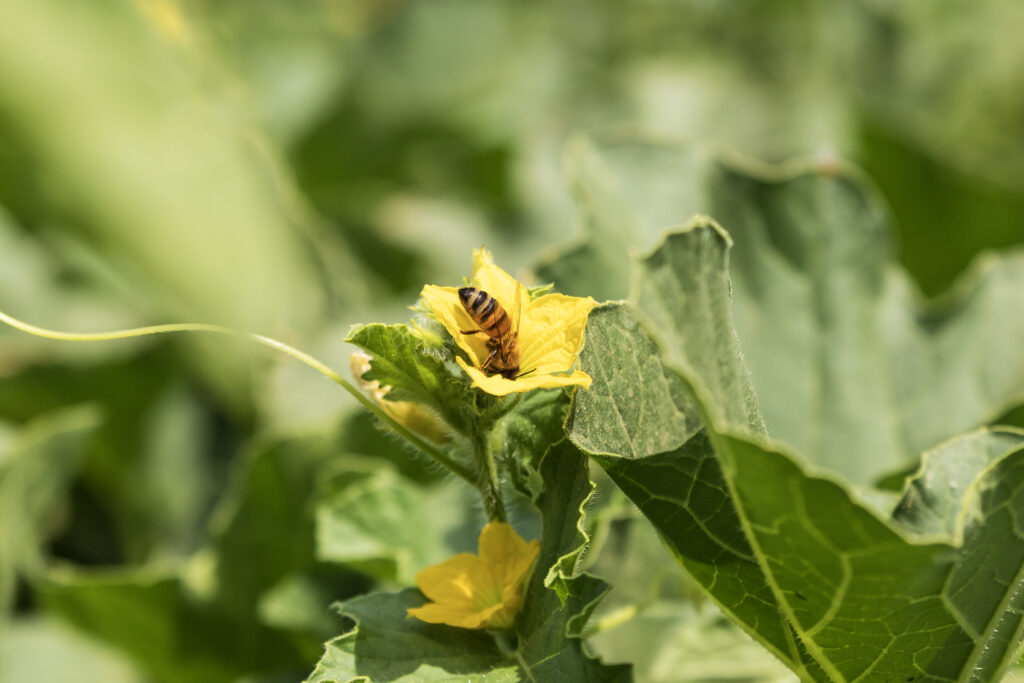
Modern agriculture relies heavily on a series of fundamental biological processes, including pollination, which is a key driver of crop productivity. Honeybees and bumblebees play an irreplaceable role in pollination, helping not only to increase yields but also to preserve biodiversity and keep farm ecosystems sustainable. Melon, watermelon and courgette crops benefit greatly from these pollinating insects, and farms like Top Melon are putting strategies in place to encourage them and support sustainable agriculture.
Why are bees and bumblebees essential for crop pollination?
Bees and bumblebees pollinate many crops, carrying pollen from flower to flower and enabling plants to reproduce. This process is crucial for fruit set and for maintaining biodiversity. Pollinating insects are particularly effective because they can visit hundreds of flowers in a short time, increasing the chances of successful reproduction. Without them, many crops would see drastic yield losses, with negative effects on the whole food chain.
How do bees and bumblebees support sustainability and biodiversity on farms?
The pollinating work of bees and bumblebees goes well beyond crop production: it is fundamental to maintaining biodiversity. These insects encourage a wider variety of plant species, making farm habitats more resilient and contributing to ecological balance. A diverse range of pollinators helps limit the spread of diseases and pests, because greater biological diversity makes ecosystems more stable and better able to withstand environmental shocks.
Why pollination matters for melons, watermelons, brassicas and courgettes
Bees, bumblebees and melon and watermelon crops
For melons and watermelons, pollination is essential for both fruit quality and quantity. Bees and bumblebees improve flower fertilisation, increasing the share of flowers that turn into fruit and contributing to better eating quality. A steady presence of pollinators is therefore essential for abundant, high-quality harvests.
Pollinators and brassicas
Brassicas such as cabbages and broccoli are harvested before they flower, but pollinators play an important role wherever these plants are grown for seed, supporting genetic diversity and an even distribution of pollen, essential for successful seed set.
The role of bees in courgette growing
In courgette crops, bees are particularly important for transferring pollen. Their activity ensures good fruit set and also helps maintain ecological balance in the field, contributing to lower dependence on pesticides and a healthier growing environment.
Threats to bees and bumblebees: how can we protect these essential pollinators?
Risk factors for bee and bumblebee health
Unfortunately, several threats endanger pollinator health, including excessive pesticide use, loss of natural habitats and climate change. These factors can cause significant declines in bee and bumblebee populations, undermining their ecological role and farm productivity.
Strategies to protect and encourage pollinators
To protect and encourage pollinators, farms are adopting several strategies:
- Reducing pesticide use: biological control methods and low-impact plant protection products.
- Creating favourable habitats: maintaining and restoring green areas and wild flowering plants that provide food and shelter.
- Sustainable farming initiatives: working with local bodies and institutions to develop policies and practices that protect biodiversity.
Towards sustainable growing: farming practices that help pollinators
Sustainable techniques to increase biodiversity
Sustainable techniques such as crop rotation, cover crops and reduced tillage create a healthier environment for pollinators. They not only improve soil structure but also encourage beneficial insects that contribute to natural plant fertilisation.
Community initiatives and policies supporting pollinators
Alongside farm practices, community initiatives and public policies also play a crucial role. Awareness programmes, incentives for habitat creation and partnerships between public and private bodies can make a difference in halting pollinator decline and making farming more sustainable.
Frequently asked questions
What is the difference between honeybees and bumblebees as pollinators?
Honeybees are usually more numerous and most active in bright conditions, while bumblebees, thanks to their furry bodies, work better in cool, cloudy weather, so the two complement each other.
How can I attract more bees and bumblebees to my garden?
Planting a variety of wildflowers and herbaceous plants, avoiding excessive pesticide use and creating small natural habitats are effective ways to attract pollinators.
Which plants best support pollinator populations?
Plants such as lavender, sunflowers, clover and many aromatic herbs are especially popular with bees and bumblebees for their high nectar content.
How can the impact of pollinators on farm production be measured?
It can be assessed through yield comparisons between crops with and without pollinators, as well as direct monitoring in the field.
What are the benefits of agricultural biodiversity for ecosystems and food production?
Greater biodiversity brings ecological resilience, reduces vulnerability to pests and diseases and improves overall soil quality, with direct benefits for yields and food security.
Bees and bumblebees are fundamental to successful sustainable agriculture. They ensure effective pollination of crops such as melons, watermelons and courgettes and help preserve biodiversity, supporting resilient, productive farm ecosystems. Farms such as Top Melon aim to create a pollinator-friendly environment through sustainable agronomic techniques and environmental protection initiatives, so that agriculture can keep providing a sustainable food supply while safeguarding the pollinators at the heart of natural ecosystems.


